Article translated by an automatic translation system. Press here for further information.
Hostels on the Camino de Santiago. What types there are and how they work
24/08/2026
The hostels on the Camino de Santiago for pilgrims are much more than mere refuges to spend the night. In fact, they constitute the social heart of the experience. They are places where friendships are forged, the experiences of the day are exchanged and a unique spirit of solidarity prevails, which sits with all the people who carry out the adventure.
There are different options, each with its own characteristics and operation, which we will analyze in detail so that you have all the information before making decisions.
Find out everything you need to know about public shelters, parish shelters, and private shelters.
Typology of hostels on the Camino de Santiago
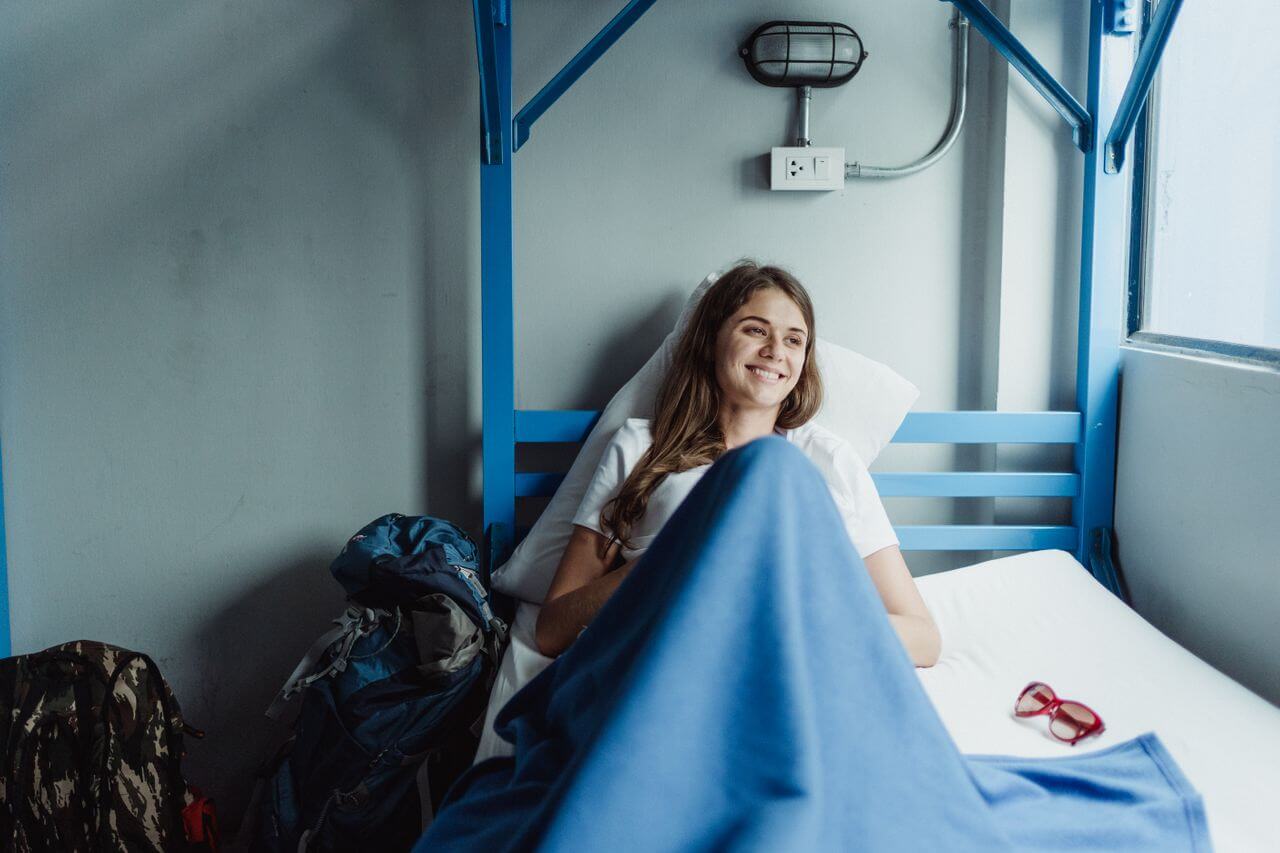
Photo by Ketut Subiyanto
The first thing to be clear is that hostels are not conventional accommodations. They don't look like hotels or rural houses; they're much more modest.
In them there are no luxuries or a complete privacy, because they seek to connect people and that good harmony and mutual support predominates in the face of difficulties throughout the pilgrimage to Santiago.
If we think of a hostel, the image that comes to mind is that of a space with narrow bunk beds and basic bathrooms. However, in recent years, many of them have been evolving and their facilities are somewhat different. Some maintain their traditional form and others have introduced improvements in all services so that pilgrims feel more comfortable after long walks: toilets and showers with hot water, very well equipped kitchens, washing machines and dryers —usually for a fee— and spaces to lay clothes.
In general, there are three options of hostels that we can distinguish:
-
Public and municipal shelters
They are managed by municipalities and autonomous communities. They are not looking for an economic benefit, but to offer a quality, accessible and affordable service to the pilgrims who stay in them.
Its rates are very reduced, between 10 and 15 euros per night, and are intended to cover the costs of cleaning and maintenance of basic services such as electricity and water.
It is important to know that they do not allow reservations in advance and that, therefore, they are completed by strict order of arrival. This particularity generates a certain restlessness in high season, which makes it necessary to organize each day very well.
Likewise, pilgrims who arrive on foot have priority over those who do so by bicycle or on horseback.
-
Parish or religious shelters
They are historically linked to the Camino de Santiago, because they were the first to welcome pilgrims voluntarily. They are managed by the Church or by charitable foundations.
They depend on the altruistic help of priests and lay volunteers, people highly valued for their warmth and their humanity in welcoming.
They are mostly free and work with donations. This means that there is no established rate to be able to spend the night in them, but pilgrims are expected to contribute what they can for their maintenance, either financially or by performing some domestic task. They are sustained by principles of solidarity.
-
Private hostels
They have emerged in a more recent era as an alternative of greater comfort and better infrastructures for more demanding pilgrims.
They are managed by individuals or companies and offer the possibility to book in advance and enjoy rooms with private bathroom, wifi, breakfast, laundry services or wider common areas.
Its best services also increase its rates, which are between 15 and 25 euros per night, depending on the time of year and its proximity to towns or major cities.
Regulations of access, policy of stay and restrictions
In almost all hostels there are a number of general requirements and rules that must be respected in order to be able to access them and ensure order.
The pilgrim's credential

Photo by Forestman
The credential is a document that identifies the pilgrim and certifies that he is making an official route to Santiago de Compostela.
It must be sealed at each of the stages of the Camino and presented correctly sealed by the previous accommodation as an essential requirement to be able to access public and parish shelters. It is the way to check and exclude those people who are there to do another type of tourism outside the Camino.
Privately managed shelters can be somewhat more flexible and request only the ID, without the need for the credential, to be able to stay in them. But they usually give priority or apply special rates to pilgrims.
Stays of one night only
Except for a major cause problem, such as an illness or injury requiring rest and an extended stay, it is generally established that stays in shelters should be for only one night.
This measure is intended to facilitate the rotation of pilgrims and provide shelter to the greatest number of people who need it. Especially in high season, when the percentage of walkers is much higher and getting a place in a hostel can be an impossible mission.
Animals and pets
Photo by Massimo Trovati
The volume of people in small spaces and the rules of coexistence of the hostels make it difficult to share the stays with animals and pets. Reasons such as hygiene, the possibility of people with allergies, noises or possible altercations that interfere with the collective rest make the entry of dogs and cats vetoed in almost all of them.
If there are pilgrims traveling with their pets, they should look for alternatives of accommodation in hotels, hostels, pensions or campsites that do allow them.
Schedules and daily operation of the Camino hostels
Shelters usually have internal dynamics and daily operating regulations that must be respected and complied with in a strict manner to ensure a smooth coexistence.
Arrival and departure times
The mandatory departure time of the hostels is usually between 8:00 and 8:30 in the morning. Doing it in strict silence is another rule focused, above all, on preventing pilgrims who get very early and start the march at dawn from interfering in the sleep of others.
The check-in time usually starts from 13:00 or 14:00 hours.
In this way, the cleaning tasks are facilitated and it is achieved that the beds and all the rooms are ready with time to receive new pilgrims.
Closing doors and turning off lights
Already at night, the hostels close their doors to the public around 22:00 or 23:00 hours. The automatic turning off of the room lights occurs shortly after the closing time.
This measure seeks to force silence and facilitate as much as possible the night rest of all the people housed, so that they can face with energy the day of the Camino of the following day.
In our complete digital application, Plan My Way, there is a section with direct access to updated information about the hostel network. This content is perfectly organized by routes and stages to facilitate queries, and you can select and save those that interest you.
It is important to know well the differences between them, to know if they accept advance bookings or not, the prices, how and who manages them, the rules and how they work. These key points will help you choose the hostel that best suits you and your needs during the trip to Santiago.