Article translated by an automatic translation system. Press here for further information.
The Camino de Santiago by bicycle
31/03/2026
 Image:
Richard REVEL
Image:
Richard REVEL Touring the Camino de Santiago by bicycle is a popular alternative for people who want to experience the crossing at another pace, without giving up their magic. It brings an exciting and totally different perspective, and more and more pilgrims arrive in Santiago pedaling.
Whether you are an expert cyclist or a novice, you must be well prepared before starting the trip, because many of the stages go through stone roads, not asphalted, and sections with climbs and descents.
In this article we want you to have at your fingertips all the basic information you will need to prepare your two-wheeled feat. We will address practical tips and topics such as recommended routes, bicycle choice, stage planning or luggage organization. Don’t miss anything!
The Camino de Santiago by bicycle: initial considerations
Using a bicycle as a means of transport on the Camino implies living it from a different point of view to the pilgrims who walk. And this choice, has pros and cons that it is advisable to be clear to know what awaits you.
On the one hand, the bike will allow you to move at a much faster pace and cover longer distances in a shorter period of time. Reach inaccessible places by walking and you can explore nearby environments that interest you to know outside your route. You can also easily move around the places you visit, and dedicate more quality time to them.
On the other hand, speed and concentration along the way while you’re on the go can influence your connection with the environment. Make you overlook details of the landscape that, walking calmly, you would perceive much better.
On foot, it is also easier to interact with other pilgrims, exchange sensations and establish relationships.
Best times of the year for the Camino by bicycle
Weather conditions vary a lot by months, and to ride the bike, the ideal seasons are spring and autumn.
The strong points? its temperate temperatures, a lower probability of rain, which makes the roads more transitable, and the smaller influx of pilgrims to enjoy with more tranquility.
In addition, nature offers a postcard environment at both stations. The flowers and green vegetation in spring, and the beautiful reddish, brown and yellow colors of the leaves in autumn. Its golden landscapes and a softer and warmer light.
Summer and winter are a challenge.
In July and August the heat can be extreme. It’s easier to get dehydrated and feel exhausted. They are also the months in which a greater number of people are concentrated, further complicating accommodation in hostels and movement along the routes. In this regard, it is important to know that until 20:00, pilgrims who arrive on foot have a preference to stay.
In winter, low temperatures and the probability of rain and snow can affect the trails, making them complicated and more dangerous. These are months with fewer hours of light, and it is necessary to plan each stage in detail and often consult the weather forecast to be prepared for possible changes.
The best routes of the Camino for cyclists

Photo by Freepik
Many Camino routes are currently adapted for bicycles. There is an infrastructure that supports cyclists and includes well-marked roads, services and hostels that facilitate the experience.
What it’s all about is choosing the route that best suits your physical condition and skill level.
In our guide to the Camino de Santiago we have detailed information about the different bicycle paths, however, below we will propose some outstanding routes for cyclists of different levels, and their main characteristics.
Camino Frances
It is the most popular and frequented Jacobean route, also among cyclists. Suitable for all levels, it is especially recommended for novices because it offers a good infrastructure and is very well signposted.
The start of the Camino Frances is in Saint Jean Pied de Port, in France, with the option of starting from Somport, in the Pyrenees. In total there are 939.7 km, distributed in 16 stages of medium-high difficulty. It can be completed between 10 and 14 days, with an average of between 50 and 80 kilometers per day.
The route combines shorter sections with other sections of climbs and descents. Trails by asphalt in good condition and by rural roads. This diversity makes it perfect to experience a smoother shooting in some areas, and a more demanding and connected experience with nature in others.
Camino Portugues
Like the Camino Frances, it is a suitable route for cyclists of different levels. Its route is accessible and its route is mostly flat. A perfect alternative for those who prefer to take a more relaxed and less physically challenging path. It also has good signage and services.
In its shortest stretch, the Portuguese Way begins in Tui, and can be done perfectly in two stages of medium difficulty. One of 52.1 km, from Tui to Pontevedra, and another of 66.7 km, from Pontevedra to Santiago.
It is an option that will allow you to enjoy the Camino if you do not have many days, rolling both on asphalt and on trails.
Camino del Norte
The Camino del Norte is one of the most complicated and challenging routes. Indicated for expert cyclists, well prepared, and with a high level of skill and resistance. It is well signposted and easy to orient.
It departs from Irún, and runs mostly along the Cantabrian coast, although it also has mountain stretches. It offers natural and maritime landscapes, with cliffs and beaches, spectacular. And the possibility of visiting cities such as San Sebastián, Bilbao or Santander.
It is completed by reaching Arzúa (A Coruña) in 814.7 km and consists of 14 stages of medium-high difficulty, where unevenness and irregular terrain abound. It is normal to spend 10 to 16 days, depending on the pace invested, making an average of between 50 and 80 kilometers per day.
Camino Primitivo
The oldest route of the Camino de Santiago is also known for its hardness. It extends through mountainous landscapes with pronounced slopes, trails with steep slopes and irregular terrain.
It is a journey of a great physical challenge, which requires preparation, skill and good control of the mountain bike.
It is well signposted, but there may be some confusing stretch. There are fewer services and accommodations than on other routes.
The Camino Primitivo begins in Oviedo and has an extension of 321.4 km to Santiago de Compostela. It consists of 6 stages of medium-high difficulty, to which can be assigned between 5 and 8 days.
Other roads and alternatives for cyclists are the Camino Sanabrés and the English Way.
The first one crosses varied landscapes of mountains and valleys. It is quieter and less crowded. It offers the possibility to explore alternative routes less known, but very beautiful.
The second is suitable for cyclists of different levels and runs along the Galician coast. It has a good network of services and facilities for pilgrims.
The choice of the bike
The right choice of bike for your two-wheeled pilgrimage will be vital to ensure your comfort and safety throughout the Camino.
There are different models of bicycles to assess depending on the route you choose and the type of terrain you are going to cycle on.
Road bikes
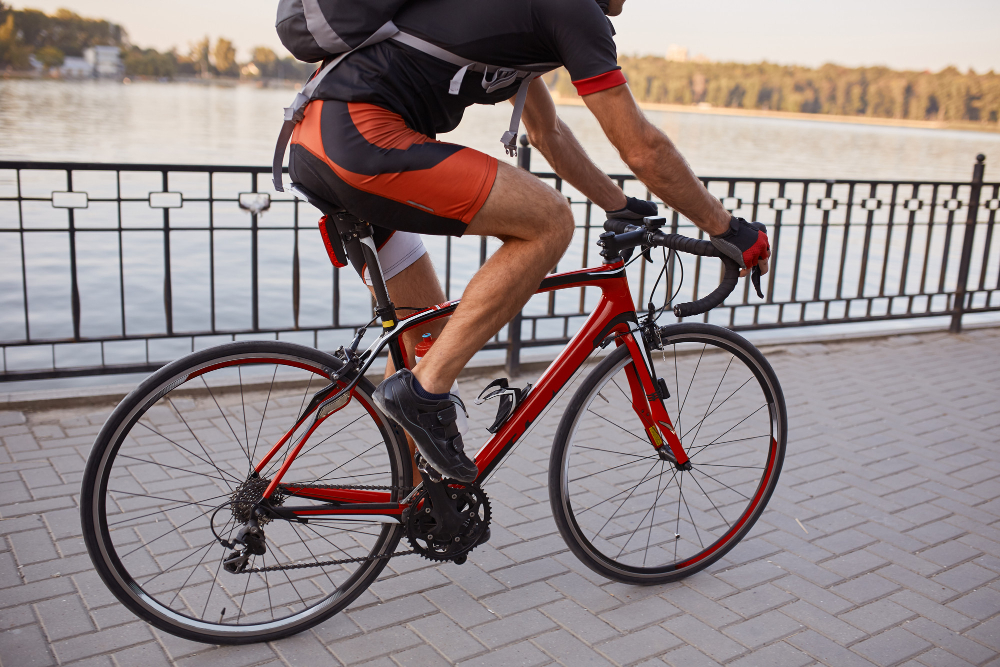
Photo by Hidden
These bikes are created to be used by asphalt areas, not on irregular trails.
On the Camino a large part of the routes pass through areas of land or gravel, but there are always alternatives by asphalt. They can be taken following the deviations found in many of the sections marked with yellow arrows.
Gravel bikes
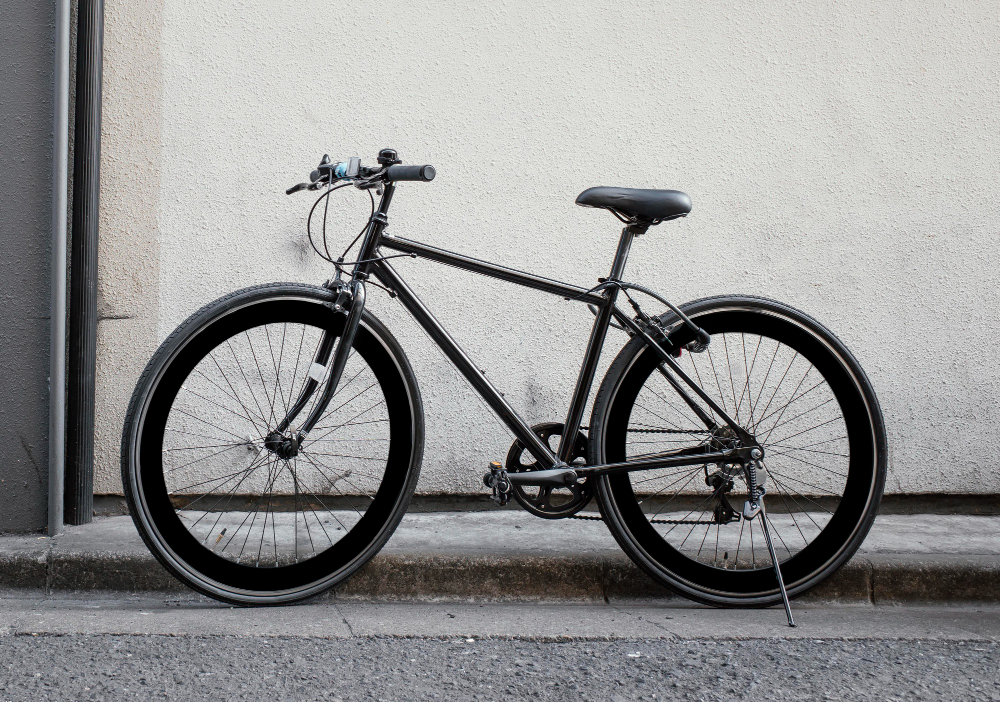
Photo by Freepik
They are designed to offer comfort over long distances, where different surfaces such as asphalt and mountains alternate.
The Camino Frances and the Camino Portugues have numerous wide paths, well maintained, and in them it is possible to travel with a bicycle of these characteristics. It is more efficient on forest tracks, compact gravel roads, non-technical trails and secondary roads.More aerodynamic and with less rolling resistance than a mountain one.
Mountain bikes or Mountain Bike (MTB)
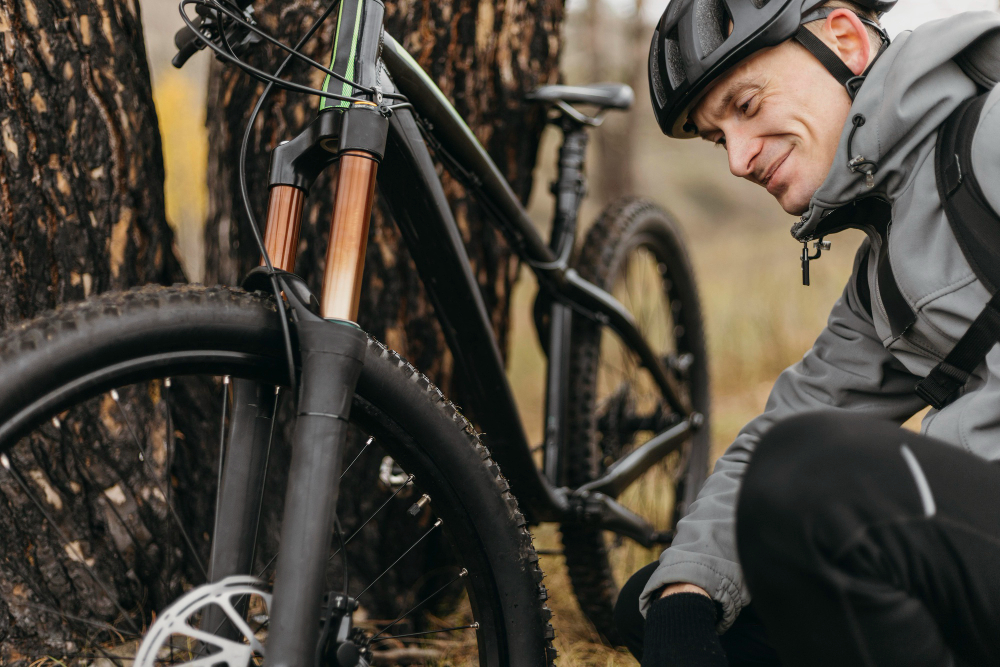
Photo by Freepik
They are the ideal choice for those bikers who want to make some route more difficult, such as the Camino del Norte or the primitive Camino.
They are indicated for technical terrain, with stones, roots and more difficult descents. These types of bicycles with suspension and wide tyres, provide better control, and greater stability and safety in irregular surfaces and mountain areas.
Electric bicycles
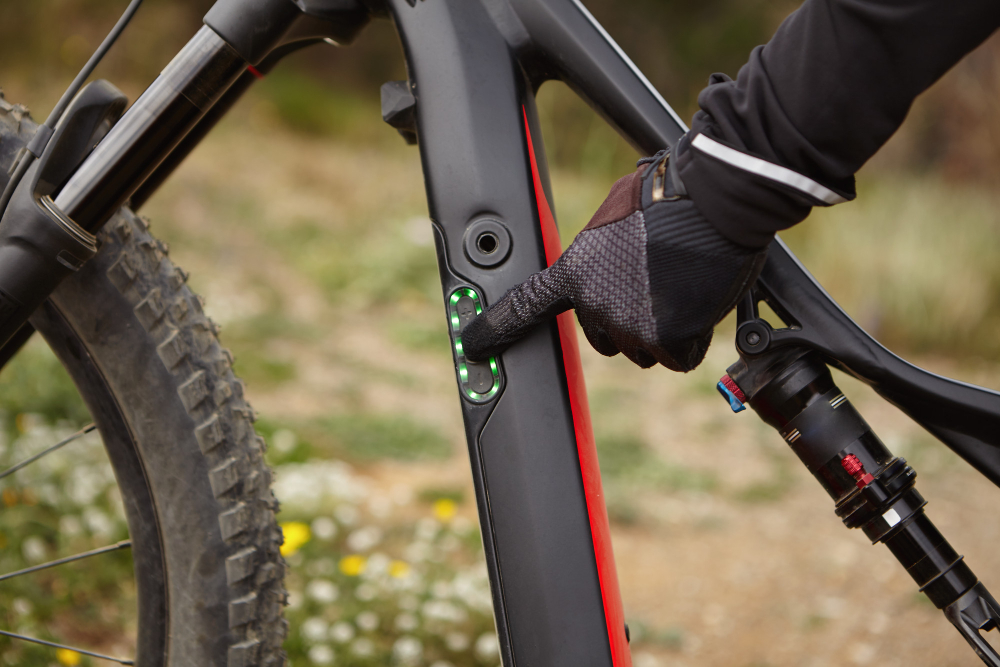
Photo by wayhomestudio
They have been gaining popularity because they offer the advantage of traveling long distances and facing complicated mountain stretches with less effort. An attractive alternative for people who are not very prepared or want to do the Camino in a relaxed way.
But they also have some disadvantage. On the one hand, the regular electrical load necessary for its operation, requires greater planning of the stops. It is essential to know the points where it is possible to recharge the battery. On the other hand, the weight of the bicycle itself and the extra weight of the battery can condition its handling in complicated areas.
Before the start of the experience, it is essential to perform a overhaul of the chosen bike to ensure that it is in a position to face the Camino:
- Do a review of the tires, checking that they are not worn or low in pressure.
- Check that the brakes do not fail.
- Adjust the handlebar and saddle to the appropriate height.
- Check the chain and gears and verify that they work properly, gently.
In addition, you have to prepare a basic toolkit to solve any unforeseen events during the crossing. It should include a mini portable air pump, puncture repair patches and a set of tools with the essentials to make quick adjustments (wrench, multi-tool wrench, flanges, lever to disassemble covers, etc.)
Preparation with the bicycle before the Camino
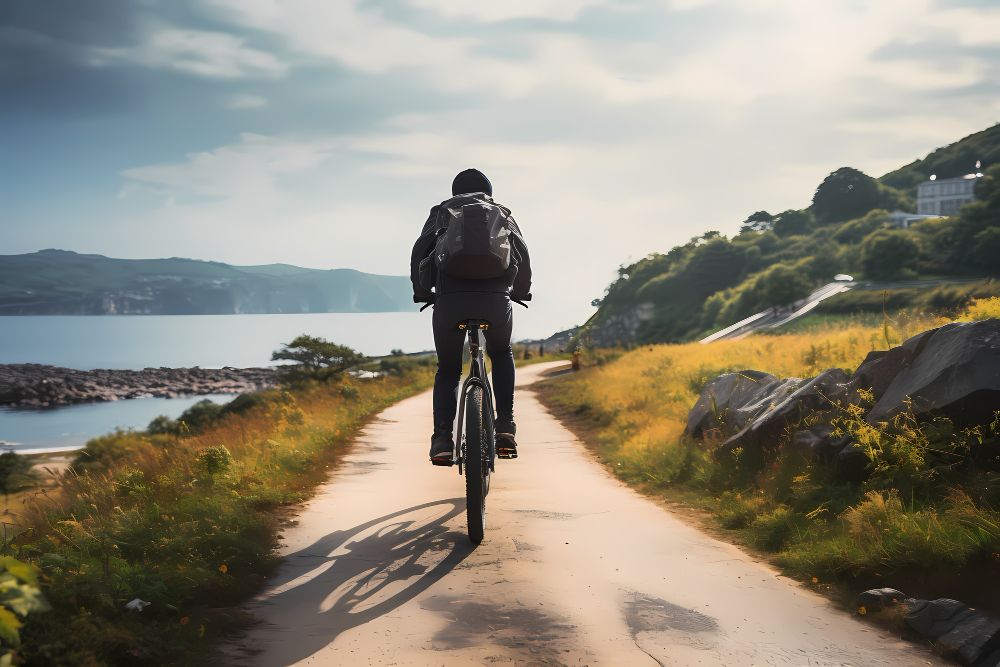
Photo by wayhomestudio
Whether you decide to do the Camino de Santiago on foot or by bicycle, prior physical preparation is totally necessary to better enjoy the experience, prevent injuries and reduce fatigue.
If your travel “companion” has two wheels, training should be done with her a few months before the adventure begins. It is also advisable to train with the luggage, or the same load that you will carry on the bike, to adapt to the additional effort of going with weight.
Start by choosing training routes with characteristics similar to those you will find on the route. It rolls on various types of terrain.
Then, make short exits to gradually increase them in distance.
If you want to improve your endurance and fitness, high-intensity exercises in intervals and strength training for the legs and the core will be a great help.
The planning of the stages
When dividing the stages, the first thing you have to take into account is the physical state with which you will arrive at the beginning of the Path. As well as the time you will devote to doing it. Planning will not be the same for an experienced cyclist as for a beginner.
Generally, by bicycle they usually travel around 60-80 km per day, with an average of between 11-13 km per hour. Although these data will be conditioned by the level of tiredness, the number of stops you make and the weather conditions.
It is convenient to know very well the characteristics of the chosen route and the different types of terrain that will characterize each stage. There will be some which are more difficult, which are genuine leg breakers and prevent a steady rhythm from being maintained, and others which are easier and more bearable.
It is recommended to organize all trips on a map, considering the expected time to rest.
Good pre-planning, such as the one you can do through our “Plan My Path” tool, will allow you to make adjustments in less time and will make your journey more fluid.
Organization of luggage on the bike
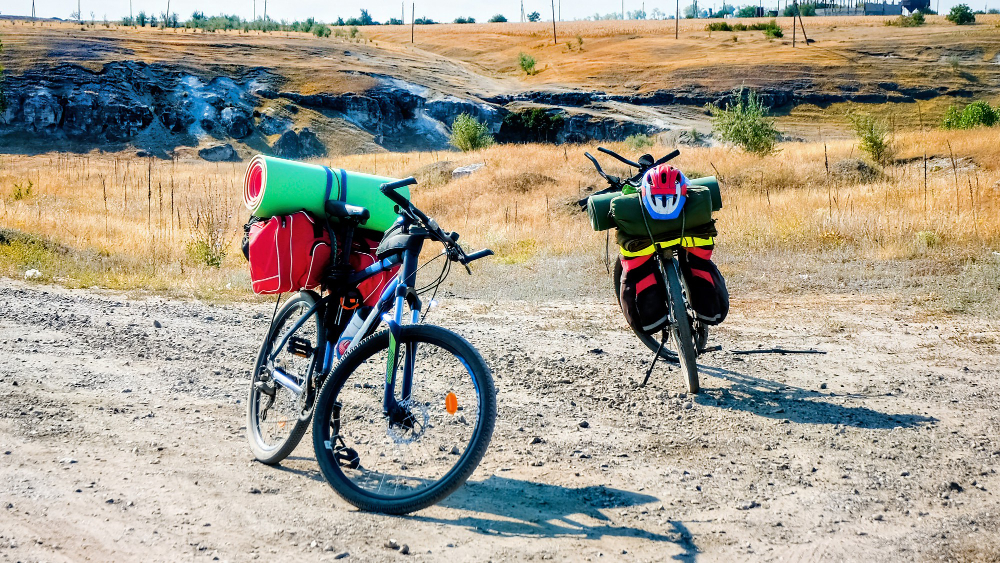
Photo by frimufilms
One of the advantages of doing the Camino by bicycle is not to carry the backpack on your back. The luggage is distributed in different saddles distributed by weight, which helps maintain the stability of the bike and allows a more comfortable and efficient pedaling.
There are different types of saddlebags or travel bags:
- Rear saddles: Two saddles are usually placed on the back of the bike so that the weight is balanced, although it can also be only one, more loaded, without this affecting the handling much.
Its capacity can vary between 20 and 50 liters, depending on the amount of luggage needed. A journey of many days, or in cold months, will require a larger saddlebag than a getaway of a few days.
- Front saddles: smaller in size, their capacity usually hovers between 10 and 20 liters. In order not to destabilize the bicycle, two must be placed, with a similar weight and volume.
They are usually used to carry extra weight or some items or garments that are often needed during the journey.
- Handlebar bag: with a volume of 5 to 10 liters and easy access, it is perfect to store small and light objects such as the mobile, the wallet with the documentation, the map with the information of the chosen route or some snack.
- Triangle bag with shoulder pad: Small in size, it’s ideal for carrying the basic toolkit. It is placed under the saddle bar.
If you’ve been thinking about cycling the Camino de Santiago for some time, stop looking for excuses and get organized now!
Feel the freedom to pedal with a purpose, in a unique and incomparable adventure that you will not forget.