Article translated by an automatic translation system. Press here for further information.
Which footwear is better? Boot or shoe?
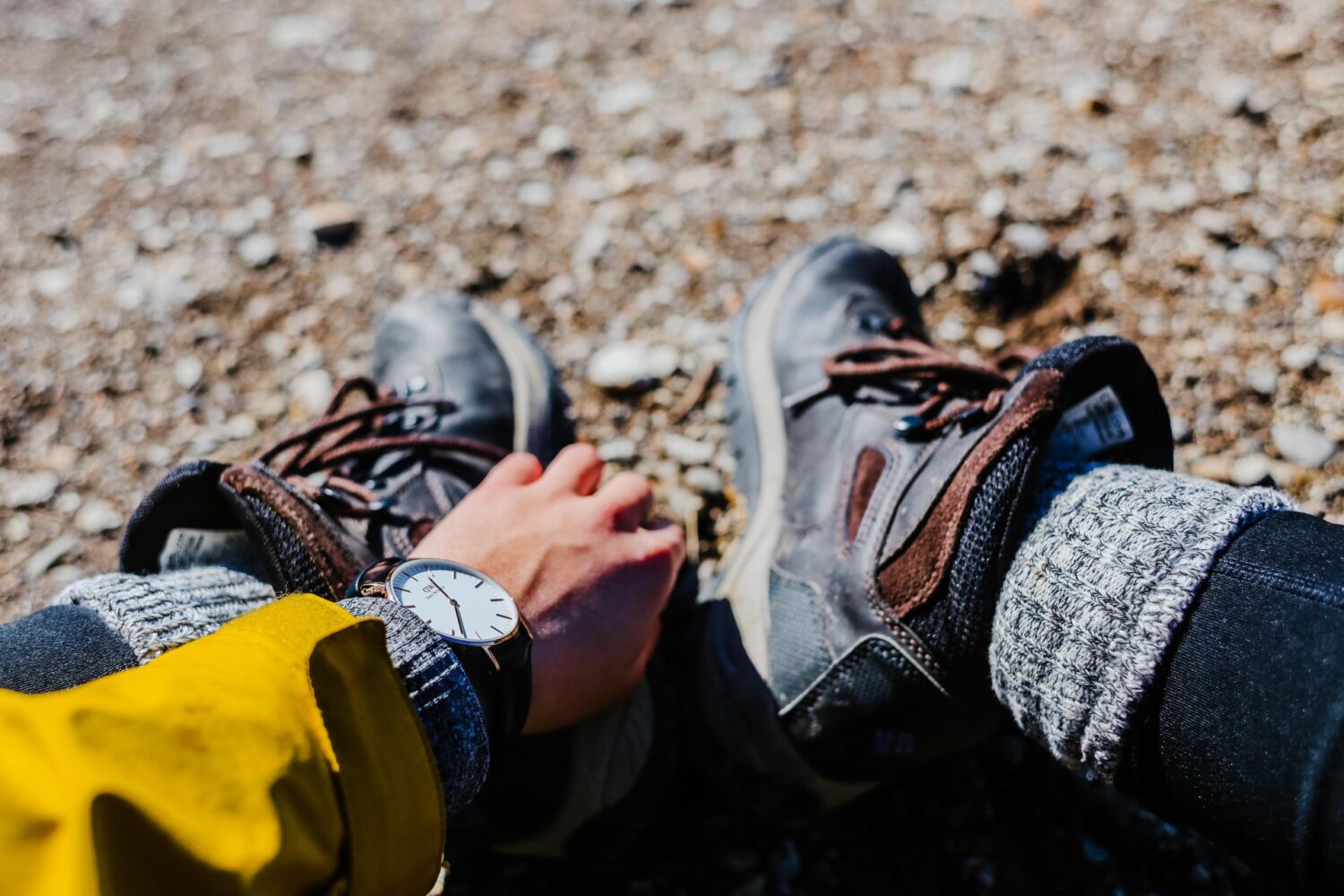 Image:
Rachel Claire
The pilgrimage to Santiago is an exciting adventure, but it will also be a great test of fire for your feet, who will have to endure long hours of walking, in consecutive days, and for changing terrains.
In fact, we are talking about a usual average of 20 to 25 kilometers per day per stage of the Camino. An extraordinary challenge for which you must prepare and protect this part of your body very well.
It is essential that you train beforehand with the footwear you will use. Only in this way can you get used to your feet, avoiding injuries or injuries during the march, and guarantee them good support for the days that your adventure lasts.
In this sense, choosing the perfect boot or shoe will be key to ensure that your Camino is a path of roses and not thorns.
There is not a single ideal option to consider, but several possibilities that we will analyze according to various factors so that you choose the one that is most comfortable and convenient for you. Let's go one by one!
Biomechanics of the foot and types of terrain
Biomechanics of the foot refers to the movements and forces that affect it and the ankle as we walk, run, or stand still.
It encompasses the interaction between joints, muscles, tendons and bones when absorbing or dampening impacts, driving each step or distributing body weight both in motion and statically.
The diversity of terrain along the Xacobeas routes and the temperature and weather conditions of each season, can put your feet in serious difficulty. That is why it is so important to make a correct footwear choice considering the following aspects.
Irregular terrain and with slopes
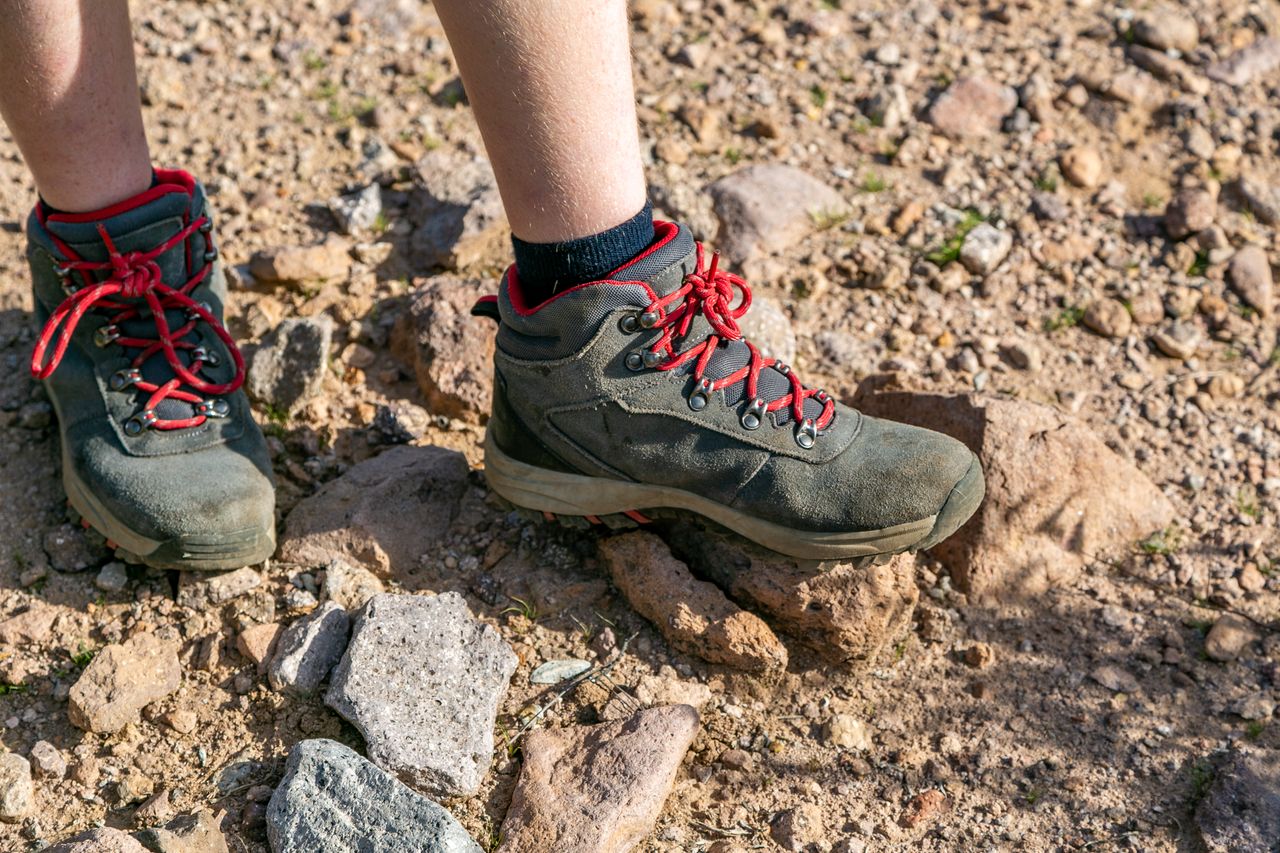
Photo by Lisha Dunlap
If the route is irregular and is characterized by stones, soil, roots and slopes, conditions very different from those we are accustomed to daily, it is easier to overload muscles and tendons.
In addition, walking on steep and sloped trails will require greater stability and protection of the ankles. In this case, the suitable option may be a high cane boot. Especially if you've suffered a previous sprain. Although being more rigid and heavy, it has the drawback that it limits the normal flexing of the foot and makes it difficult to perform a natural gait.
As an alternative to the traditional hiking boot, you can opt for the medium cane trail shoes. Models that are more flexible, lighter and facilitate a natural footstep.
Non-technical terrain
If, on the other hand, the itinerary is flat or less demanding, a trekking or trail running shoe will be the most correct alternative. They are lightweight and flexible models that allow greater freedom of movement and favor the distribution of loads in a healthier way.
Mixed terrain
It can also be that the route combines different surfaces. In this case, what would be indicated would be to opt for a model of boot or shoe “neutral”, which adapts to a mixed terrain.
Essential technical characteristics of the footwear for the Camino
To protect your feet from any difficulties during the Camino, a good shoe must meet a series of technical characteristics and be made with specific materials.
The importance of the drop
The drop is measured in millimeters, and is the difference in height between the heel and the front of the fingers. It is relevant because it conditions the distribution of loads on the feet, the twins and the knees, and directly affects comfort.
If you carry a backpack with weight and for mixed terrain or slopes, a medium-high drop is recommended, between 8 and 12 mm. In this way, the heel is raised slightly, preventing muscle overloads due to accumulated fatigue and reducing tension on the twins and the Achilles tendon.
Walking with zero drop footwear without being used to it would increase the risk of tendinitis.
Soles and grip for safety
Many of the Camino’s routes run on mixed terrain that combines slippery asphalt, stones, soil and roots. This variety of surfaces makes good traction and a good grip necessary.
Technology and high quality soles with traction cleats, such as those of the Italian company Vibram, offer stability with adverse weather and great adhesion in mud and wet stones. In addition, they considerably reduce the risk of falls, favoring a stable and constant advance.
This manufacturer provides its soles to many of the most well-known brands of mountain footwear on the market. They are easy to identify by the yellow octagon they incorporate into them.
Impermeability vs breathability
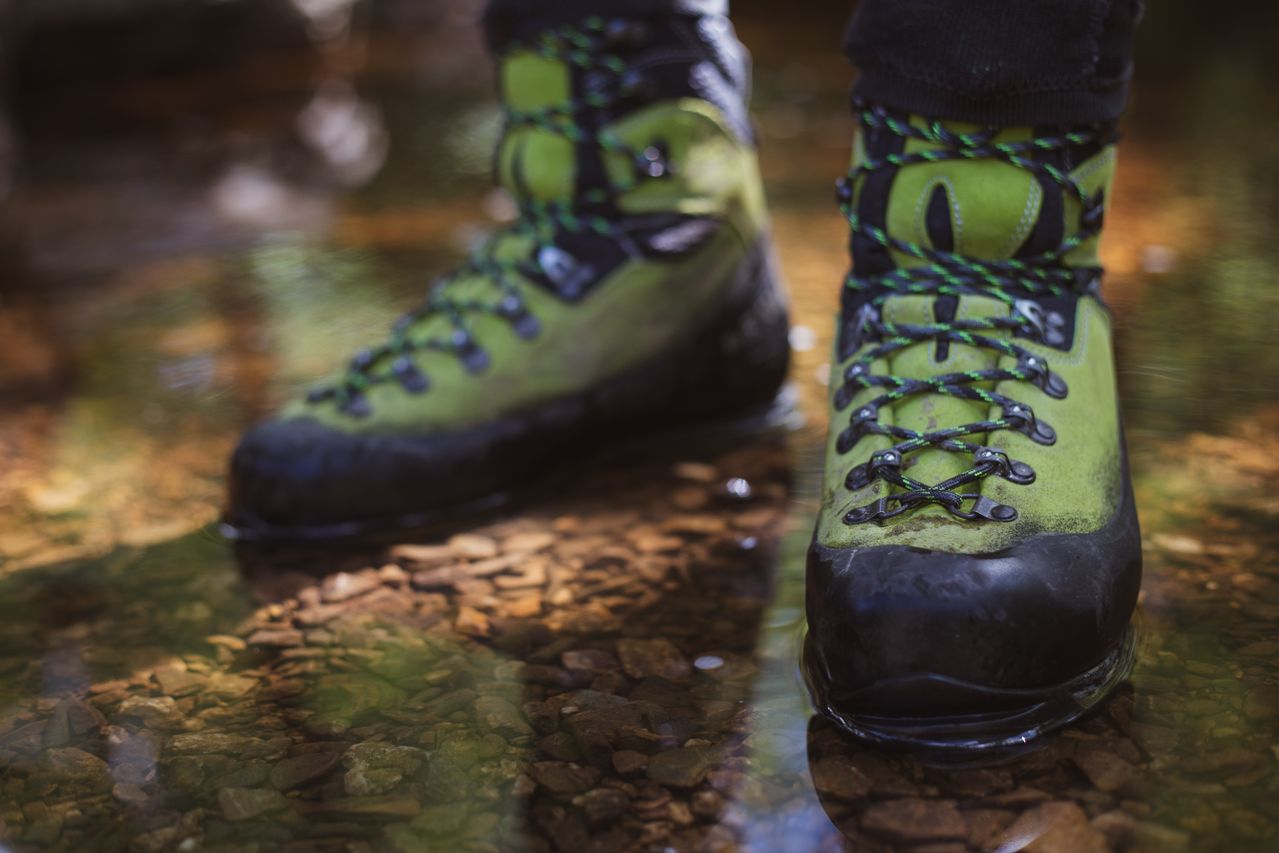
Photo by Vincent M.A. Janssen
Choosing between impermeability or breathability usually generates doubts. What should we prioritize?, to keep the foot dry and free of moisture or that the footwear is breathable so that the sweat does not remain retained inside the boot or shoe?
The answer is simpler than you think. It is at the time of the year and the weather conditions planned for your pilgrimage days.
In the autumn, winter and early spring months, humidity and cold are a danger to the health of the feet. Therefore, to keep them dry and warm, it is fundamental to have a shoe with waterproof membranes GORE-TEX that prevents the passage of water from the outside. Although the footwear with GORE-TEX makes it possible for the foot to transpire, the ventilation that the membrane allows is very little.
The summer months, warmer and with high temperatures, it is essential that the footwear allows the circulation of air and that the feet are ventilated.
In fact, wearing waterproof shoes with heat is a mistake, because their poor breathability can cause humidity and heat inside boots or sneakers, and the appearance of blisters or even fungal infections.
In this case, the indicated trekking models are those manufactured with light materials and technical mesh because they allow you to breathe at the foot.
Cushioning and shock absorption
The routes of the Camino are frequent with stretches that run through hard surfaces. In each stride along these paths, the weight of the body and backpack impact the ground by loading the feet, ankles, knees and hips.
To avoid injuries to your joints and reduce muscle fatigue, both the footwear and technical equipment you use during the pilgrimage should be prepared for shock absorption.
Double and triple density soles, with materials such as EVA, and memory templates cushion shocks and protect the feet, favoring a more comfortable, soft and dynamic step.
Practical keys of experienced pilgrims
Before finishing, write down two extra keys that will be of great help in the choice of equipment for your feet and your ideal pair of boots or sneakers.
Choose the right size
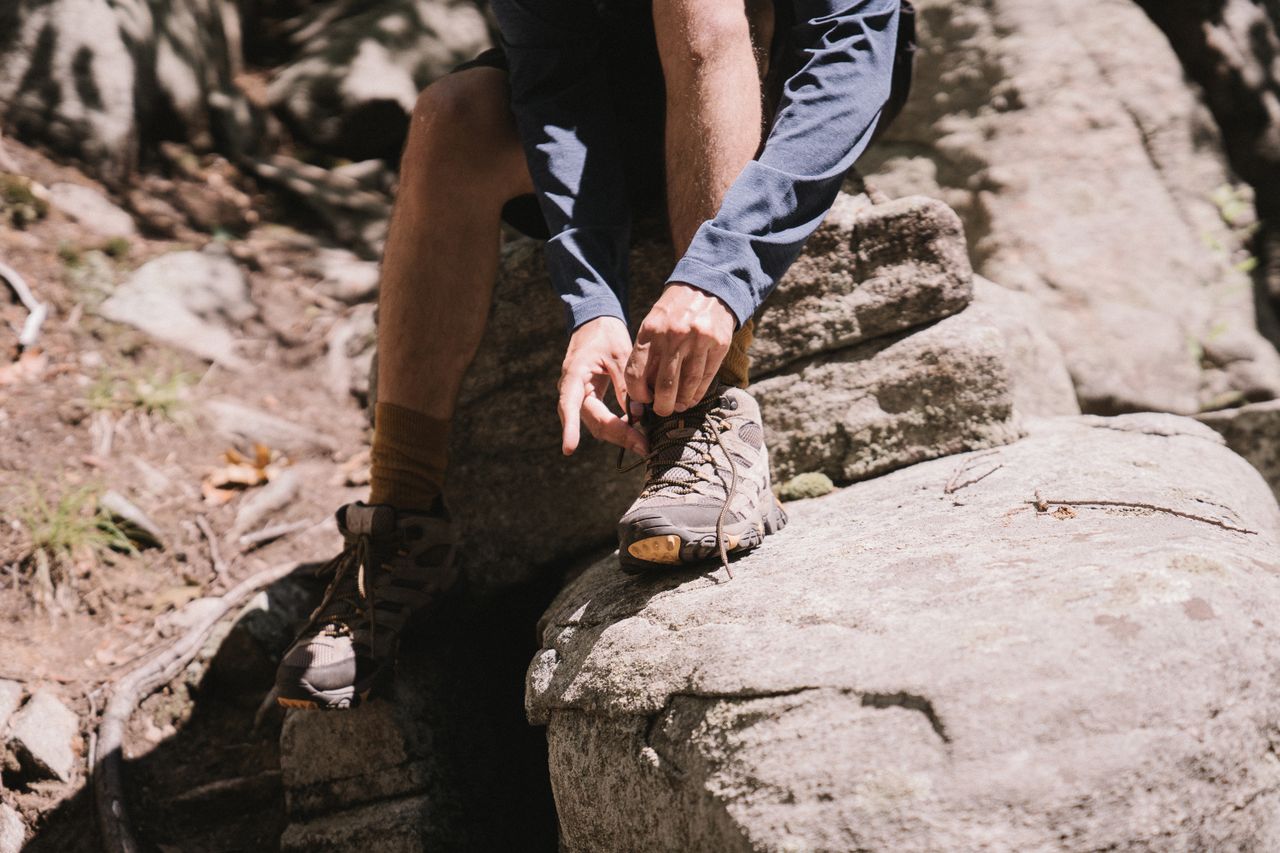
Photo by Katya Wolf in Pexels.
It is rare to find a person who has not made the mistake of buying trekking shoes for the first time without matching the size.
The first thing you need to know is that after hours of walking the feet tend to swell. Also that, in steep descents, they move forward. The consequence of this movement is that the fingers collide with the toe and the constant pressure on the nails usually damages them, causing discomfort and limiting pain. That’s why the size you choose can’t be too tight.
When you’re testing, make sure your toes don’t touch the toe even when you’re laying your foot forward, and that they have plenty of room in the front.
A trick that works to get the perfect size right? Choose the one that, carrying your foot until you touch your toe, allows you to put a finger between the end of your heel and the end of the trekking shoe or boot. And, if possible, do the test with the socks that you will wear during the Camino.
Technical socks
The “power” of a good sock should never be underestimated, because it can protect the skin, prevent blisters and chafing, and keep the feet free of moisture.
Socks should have a privileged place in your luggage. And, as with footwear, you can't make a random choice either, given its ability to influence the level of comfort and well-being you feel while walking.
The most suitable materials are synthetic fibre or merino wool.
On the one hand, synthetic fibers, such as polyester, have an excellent ability to keep feet dry, free of sweat or moisture if you walk for hours in the rain.
On the other hand, merino wool is thermoregulatory and one of the warmest. It isolates perfectly from the cold, and at the same time refreshes the feet if it is hot, allowing perspiration. It regulates the humidity, absorbing it, avoiding the feeling of wetness. It is also hypoallergenic and resistant to bad odor.
Avoid cotton socks because it’s a fabric that retains moisture from sweat and external moisture. The moist heat, in turn, favors the appearance of blisters. In the cold months, with low temperatures, it also does not help to preserve the warmth in the feet.
There is another important aspect to keep in mind when choosing a good sock: that it does not have seams that can make friction on the skin.
Analyze all the information well and with all the clear essential points, make a smart and quality purchase.
It is important that you do not forget that you will not only be choosing a simple pair of boots or sneakers, but your best ally for the Camino.
Take care of your feet so that your only concern is to fully enjoy the experience.